Thursday, January 7, 2010

Nat Geo Report: Sharks killed for swine flu vaccine


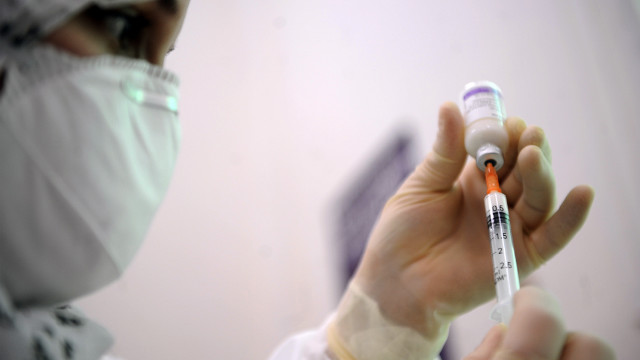
Sharks are being killed to obtain a substance called squalene for preparation of swine flu vaccine, according to a report by National Geographic.

The report said vaccines being made to protect people from swine flu are killing sharks because millions of doses of the pandemic H1N1/09 vaccine contain a substance called squalene, which is extracted from shark livers.

Olive oil, wheat germ oil and rice brain oil also contains natural squalene, but in smaller amount. This has drawn drug-makers' attention towards killing of sharks, especially the deepwater species, that contain huge amount of the substance.

According to the report, commercial fishers are being hired to obtain shark livers.

Read the rest of this article here

Orlando Sentinel: Secret health talks & Bio hazards


The U.S. isn't ready to deal with a flu pandemic, and even less prepared to handle a more serious disease or biological attack.

This alarming assessment comes from former U.S. Sen. Bob Graham of Florida, based on how the nation has responded to theswine flu. That response has been hampered by shortcomings in making vaccines and tracking the disease.

Mr. Graham is co-chair of a panel on terrorism that found the most likely mass attack would be biological. Given that threat, and the systemic problems exposed by the swine flu, policymakers need to get right to work on fixes. As the senator has noted, terrorists won't give us six months' warning.


Secret health talks

When he was running for president, Barack Obama vowed that his administration would put together a plan to reform health care and broadcast those negotiations on C-SPAN "so the American people can see what the choices are." That was then.

Now, the White House and Democratic leaders in Congress are hammering out a final deal on reform behind closed doors. President Obama's spokesman weakly argued that there already has been enough public exposure in the process.

The head of C-SPAN, the network that covers Congress, has called on its leaders to allow their health-care talks to be televised. Brian Lamb pointed out that the legislation in question "will affect the lives of every single American."

If Mr. Obama really is committed to transparency in government, he'll make sure Congress lets the cameras in.


Copyright © 2010, Orlando Sentinel

Monday, December 7, 2009

Cartoon: How to tell if you booked the wrong holiday flight...


Japan Today: 70% of Japanese see need to stock food if H1N1 flu spreads


About 70% of Japanese consumers believe it is necessary to stock up on food if the H1N1 flu spreads further and they are instructed to refrain from going outdoors, according to a recent government survey.

Of the 893 people who said food needs to be stocked in the poll, the largest number of respondents, or 33%, said they want about seven days’ supply, showed the findings by the Ministry of Agriculture, Forestry and Fisheries. Some 80-90% cited rice, canned food and wheat-based items such as instant noodles as the types of food they intend to buy if the need arises.

Japan Today: 70% of Japanese see need to stock food if H1N1 flu spreads

Friday, December 4, 2009

Montana's News Station: H1N1 e-mail scam making the rounds


The Montana Department of Public Health and Human Services is reporting that the Centers for Disease Control and Prevention has warned the state about fraudulent e-mails referencing a CDC sponsored State Vaccination Program.

The scam asks recipients of the messages to register personal information if they received a 2009 H1N1 vaccine. But, the CDC has not implemented a state vaccination program requiring registration.

Users that click on the e-mail are at risk of having a malicious program code installed on their computer's operating system.

Montana's News Station: H1N1 scam making the rounds

WHO investigates Tamiflu resistance, updates antiviral recommendations for H1N1 patients with severely compromised immune systems


Following recent reports of clusters of Tamiflu resistance, the WHO recommended that patients with severely weakened immunesystems who become infected with the H1N1 (swine flu) virus receive additional antiviral treatment as needed throughout the duration of their illness, Agence France-Presse reports.

'Although the WHO said there was no evidence that the two clusters found in Wales and in North Carolina [U.S.] marked a wider public health threat, it reiterated calls for vigilance and modified treatment advice for the frontline flu drug,' the news service writes.

In addition to ramping up antiviral treatment, the agency advised physicians treating patients with suppressed immune systems who are not responding to Tamiflu be given the alternative antiviral, Relenza (12/2).
The WHO also announced an investigation into the Tamiflu-resistant cases of H1N1 in hospitals in Wales and the U.S. showed the virus had not spread among hospital workers and the community, the Canadian Press reports.

Read the rest of this article:
WHO investigates Tamiflu resistance,
updates antiviral recommendations for H1N1 patients with severely compromised immune systems

AFP: Netherlands reports mutant swine flu death


Dutch authorities said Thursday a patient infected by a mutant strain of the swine flu virus had died, but added that this was not the cause of death.

Harald Wychgel, spokesman for the Dutch Institute for Health and the Environment, told AFP that there had been a 'minor change in the virus to make it resistant to Tamiflu,' a key treatment for influenza.

'He died not because the virus was resistant but because he was seriously ill and caught the Mexican (swine) flu,' Wychgel said.

The man, whose age had not been given, died Sunday in the northern city of Groningen, local health official Hans Coenraads said.

'We have carried out tests on the patient's associates to see if the mutation had spread but we found no such indications', he said.

Reports said that two more patients in the Netherlands had shown resistance to Tamiflu.

It is the fifth fatal case of mutated A(H1N1) flu in Europe, after two in France and two in Norway.

The World Health Organisation said last month that mutations had been observed in Brazil, China, Japan, Mexico, where the swine flu pandemic began, Ukraine, and the United States, as early as April.

Italy also reported a non-fatal case on Monday.

'The mutations appear to occur sporadically and spontaneously. To date, no links between the small number of patients infected with the mutated virus have been found and the mutation does not appear to spread,' a WHO statement said on November 20.

The WHO also underlined that there was no evidence of more infections or more deaths as a result, while the mutated virus detected up to that point remained sensitive to antiviral drugs used to treat severe flu, oseltamivir (Tamiflu) and zanamivir (Relenza).

Scientists fear that mutations in flu viruses could cause more virulent and deadly pandemic flu. The global health watchdog reiterated a call for close monitoring.

'Although further investigation is under way, no evidence currently suggests that these mutations are leading to an unusual increase in the number of H1N1 infections or a greater number of severe or fatal cases,' it added.

AFP: Netherlands reports mutant swine flu death